Kategori
Hookah Guide

How to Prepare Shisha: The Complete Step by Step Guide

A good session comes down to a handful of steps done correctly, not luck. Learning how to prepare shisha properly means getting the water level right, packing the bowl so air can move through it, and managing heat so the tobacco cooks instead of burns. Skip any of these and the same tobacco that could have produced a smooth, cloud-heavy session ends up tasting harsh within minutes.

This guide walks through the full setup from equipment to first draw, plus the troubleshooting most beginners eventually need. Tombacco is produced in Indonesia under the supervision of an international team spanning Germany, Russia, Ukraine, the Netherlands, and Indonesia — the production standard behind the steps below.

Quick Answer

Fill the base so the downstem sits under around 1 to 1.5 inches of water, then assemble the pipe and run a leak test. Pack the bowl loosely with tobacco, leaving a small gap below the rim. Cover it with foil or an HMD, light natural coconut coals until they’re fully red with grey ash, then place them on the bowl and let it preheat for 5 to 8 minutes before the first draw. Manage heat actively through the session by rotating the coals roughly every 20 minutes.

What You Need for a Proper Shisha Setup

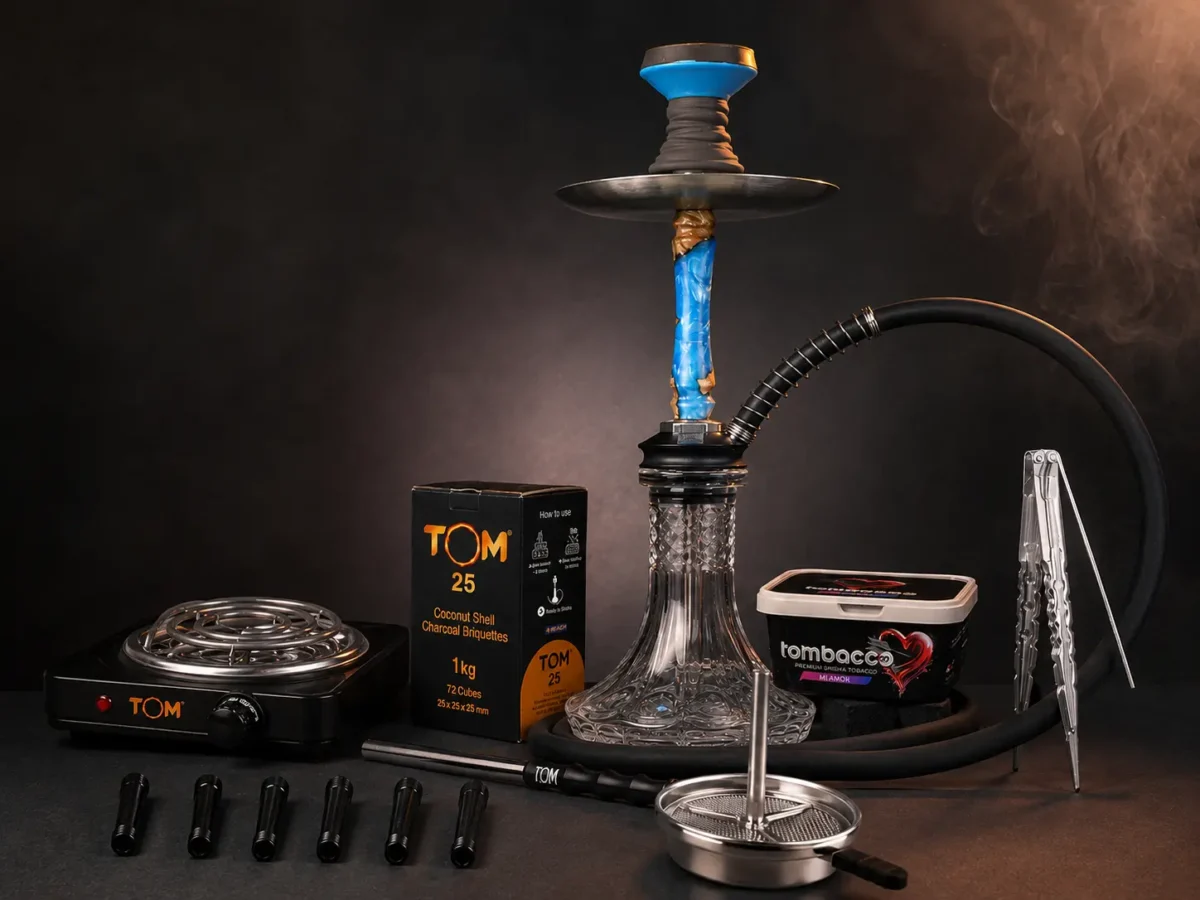
Before lighting anything, gather the full setup. Missing a single grommet or using the wrong coal type is the most common reason a first session goes wrong.

  • Hookah pipe – base, stem, tray, and hose
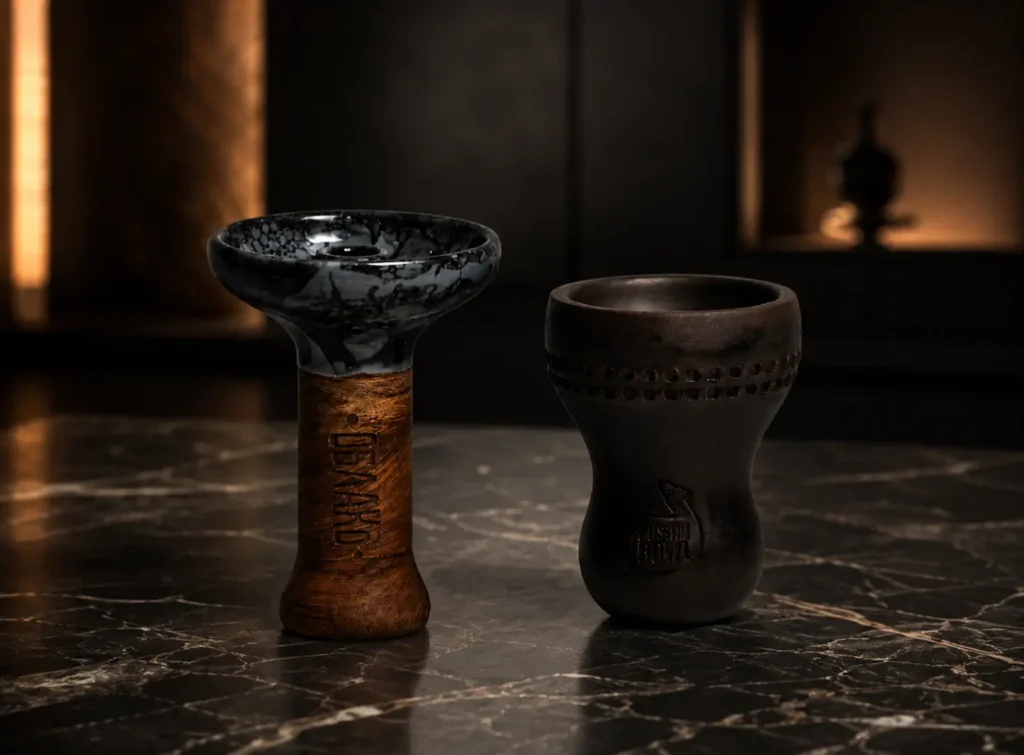
  • Bowl – Classic or Phunnel style
  • Grommets – rubber or silicone seals for airtight connections
  • Shisha tobacco – Whiteline, Blackline, or Herbal
  • Heavy-duty foil or a Heat Management Device (HMD)
  • Natural coconut coals – not quick-light
  • Metal tongs
  • Knife and cutting board – for trimming oversized tobacco leaf pieces
  • Needle or pick – for levelling tobacco once it’s in the bowl

For a first bowl, Tombacco Whiteline is the natural starting point — a washed Virginia tobacco line built for a milder, more approachable session. Anyone still deciding between a tobacco base and a nicotine-free option can work through the full comparison in Tombacco’s herbal or tobacco shisha guide before picking a line. A well-prepared session generally runs 60 to 90 minutes.

Clean Before You Start

A hookah that wasn’t rinsed after its last session carries old residue into the new one, usually as a lingering ghosting flavour or a slightly stale smell in the base. Give the stem, base, and bowl a quick rinse with warm water before assembling anything, especially if the hookah has been sitting unused for a while.

This is also a good moment to check the grommets for wear or cracking — a perished seal is one of the most common reasons the leak test in Step 2 fails.

Step 1: Set the Water Level in the Base

How to prepare shisha by setting the water level in the hookah base

Fill the base with cold water. As a general starting point, submerge the downstem by around 1 to 1.5 inches, then adjust based on the hookah’s design and airflow — stem length, base shape, and bowl style all shift where that sweet spot actually sits.

Too little water tends to send the smoke through with less filtration, arriving harsher and hotter. Too much can restrict airflow through the downstem, making the draw feel heavy. Use the 1 to 1.5-inch range as a starting point, then fine-tune based on how the draw feels.

Step 2: Assemble the Pipe and Run the Leak Test
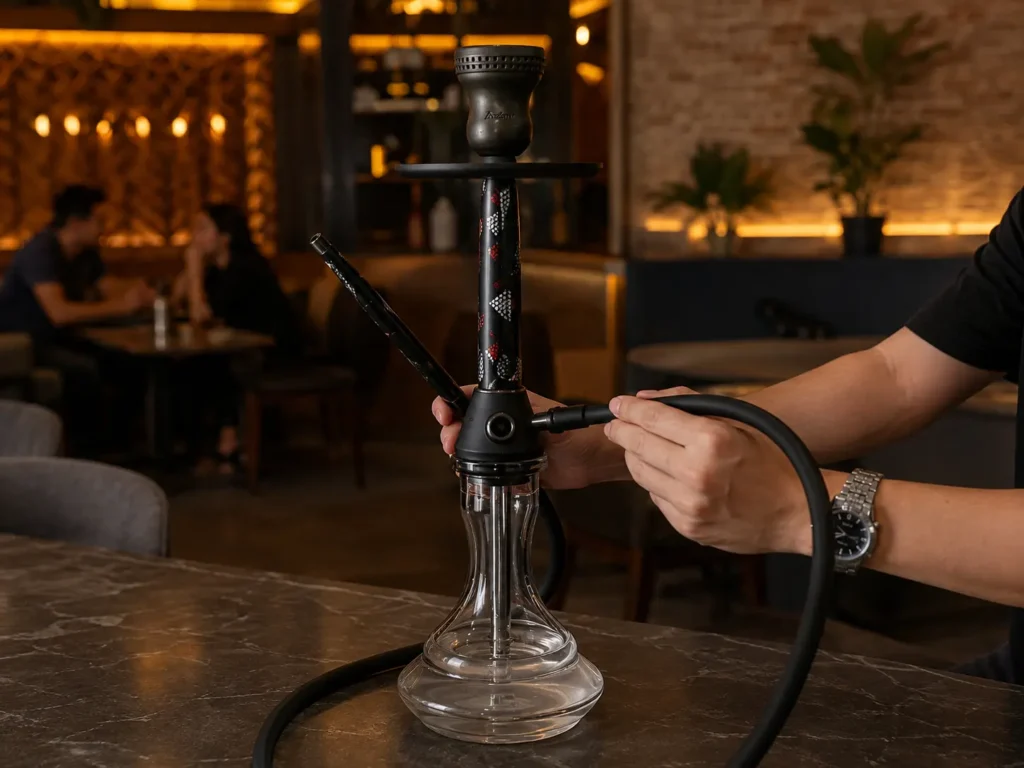
Assembling a shisha pipe and checking the connections for an airtight seal

Connect the stem to the base using a grommet, attach the tray below the bowl seat, and fit the hose into its port. Every connection needs to be airtight — a single loose grommet is enough to ruin an otherwise perfect pack and heat setup.

Before adding tobacco or coals, run the leak test: cover the open top of the stem with one hand and draw through the hose. If air pulls through easily, a grommet is loose or missing. Fixing it now saves a wasted bowl of tobacco later.

Step 3: Prepare and Pack the Shisha Tobacco
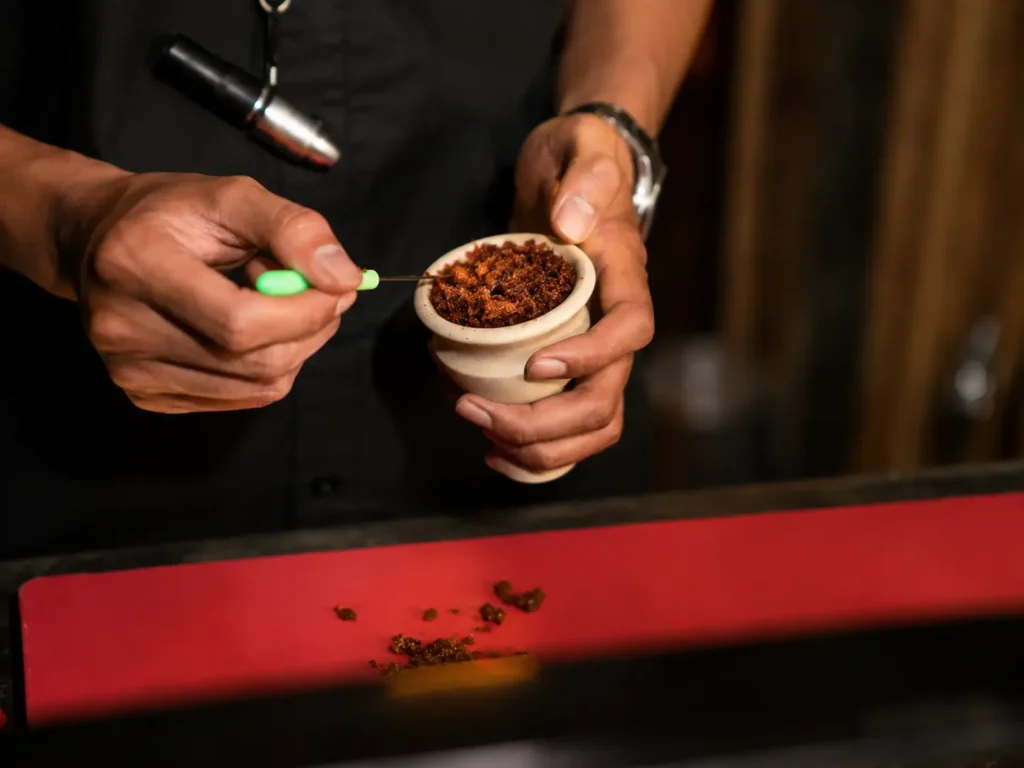
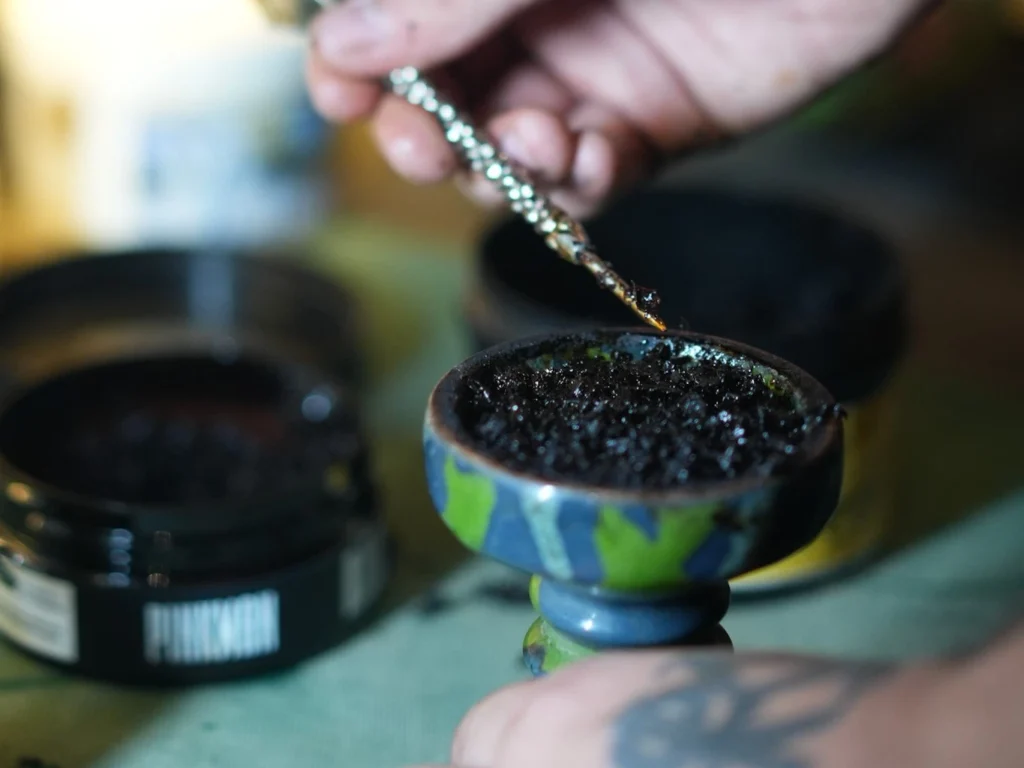
Preparing shisha tobacco by gently loosening and filling the bowl

Stir Before Packing

Stir the tobacco gently before packing to redistribute the flavouring and moisture throughout the mix, since molasses and glycerin can settle toward the bottom of the packaging during storage.

Glycerin is the ingredient largely responsible for shisha’s visible clouds — it vaporises under heat, while molasses carries most of the flavour and helps keep the leaf moist through the session.

How Much Tobacco to Use

The right amount depends on bowl size, not a fixed weight — a small bowl and a large bowl need noticeably different quantities to fill correctly. As a general starting point, around 20 grams works for a standard-size bowl; adjust up for a larger bowl or down for a smaller one, and add enough to loosely fill the bowl up to the rim gap without compacting it under its own weight.

Visible empty space at the sides usually means more tobacco is needed. Tobacco that’s already pressing against the sides or mounding above the rim gap means there’s too much in the bowl.

Use the Fluff Pack Method

Sprinkle the tobacco into the bowl loosely, using fingers rather than a spoon, and never press it down. If any leaf pieces are too large, trim them down with a knife on a cutting board first — oversized pieces pack unevenly and leave gaps in the airflow. Airflow needs to pass between the strands of leaf, not through a compressed block.

Once the tobacco is in the bowl, use a needle or pick to gently level the surface, smoothing out high spots without compacting the leaf. On an Egyptian or traditional bowl, also clear the centre hole afterward to stop it clogging.

Pack density is one of several factors — alongside bowl shape, tobacco line, and heat — that shapes how a session actually feels. Tombacco’s guide to managing nicotine level in shisha covers how these variables interact in more depth.

Leave the Rim Gap

The right gap depends on what’s covering the bowl. With an HMD, keep the tobacco around 1 to 2 mm below the rim — an HMD spreads heat evenly across the whole surface, so direct contact burns the tobacco almost immediately. With foil, a very slight touch is fine, since foil delivers heat as point heating through the punched holes directly above the leaf, and a touch of contact helps that heat transfer down into the tobacco instead of staying trapped at the surface.

Anyone experimenting with blending Whiteline and Blackline for a custom strength or flavour profile can find ratio guidance in Tombacco’s mixology guide.

Step 4: Seal the Bowl With Foil or an HMD
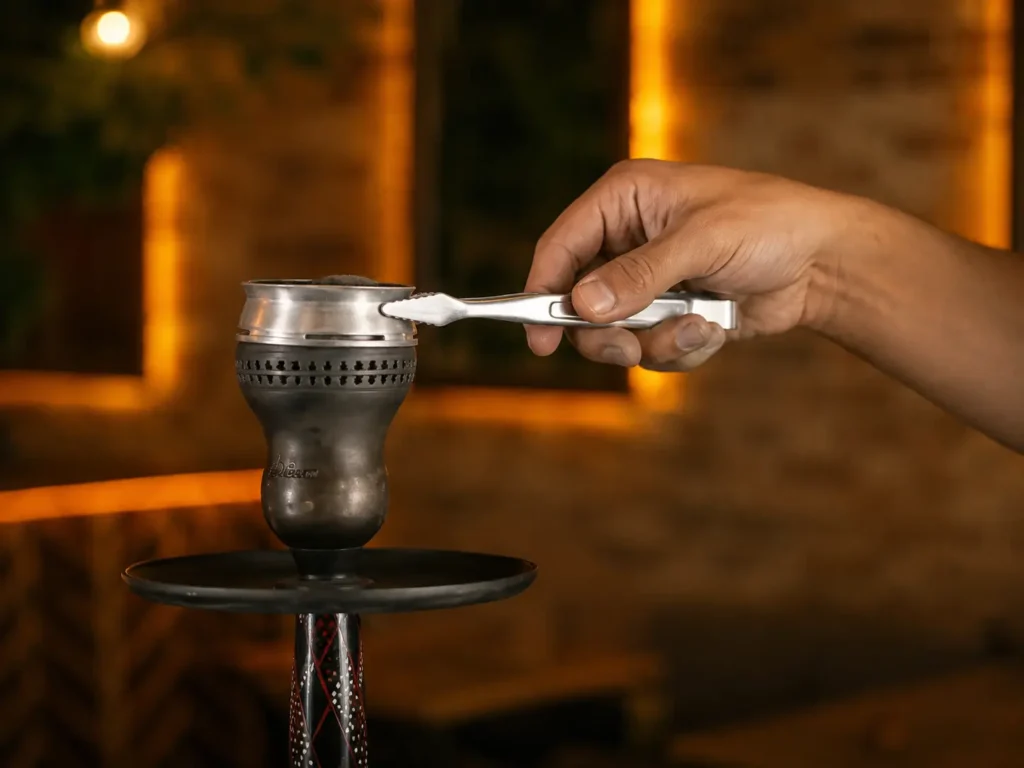
Placing a heat management device on a packed shisha bowl

For foil: use heavy-duty aluminium foil, pull it drum-tight across the bowl so there’s no sag, and secure it around the rim. Poke small, evenly spaced holes starting from the outer edge and spiralling inward, leaving the very centre clear.

For a Heat Management Device, simply set it on top of the bowl. An HMD holds heat more evenly than foil and removes the need to manage a hole-punching pattern altogether — a straightforward upgrade for anyone smoking regularly.

Step 5: Light and Position the Charcoal
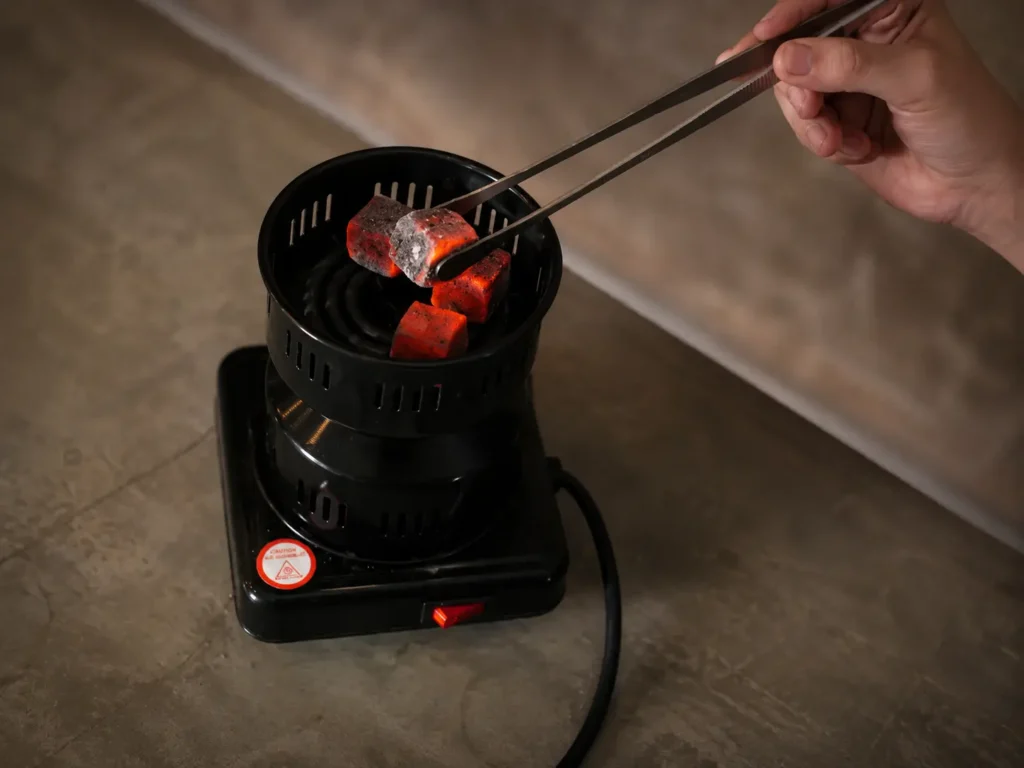
Lighting natural coconut charcoal on a burner before a shisha session

Light 3 to 4 natural coconut coals on a stove or dedicated burner. Wait until they glow red and are covered in a light grey ash, which usually takes around 8 minutes. Avoid placing coals on the bowl before they’re fully lit — incomplete combustion increases carbon monoxide production and can leave a noticeably foul taste in the smoke.

Natural coconut coals are worth the extra few minutes over quick-light charcoal, which ignites fast but burns unevenly and often carries a chemical taste into the smoke. Tombacco’s guide to choosing safe, high-quality hookah charcoal covers cube sizing and what to check before committing a full session to a new batch.

Coal placement matters more with foil than with an HMD. Foil transfers heat through the punched holes directly beneath the coal — a form of point heating — so where the coal sits changes how the bowl cooks: start it around the outer edge of the bowl rather than directly over the centre, then adjust based on the heat. An HMD distributes heat evenly across the whole bowl, so the coal can generally sit anywhere on top of it.

Either way, let the bowl preheat for 5 to 8 minutes before the first draw.

How to Manage Heat During a Shisha Session

Heat management doesn’t stop once the coals are placed — it’s an active part of the session, not a one-time setup step.

Draw slowly and steadily rather than pulling hard. A hard, fast pull drags air straight past the coals through the shortest path in the bowl, overheating a narrow channel of tobacco while the rest barely cooks. Slow, even draws spread that airflow across more of the packed leaf.

Roughly every 20 minutes, tap the ash off the coals and rotate them to a fresh spot on the bowl. This prevents localised hot spots that would otherwise scorch the tobacco directly underneath a coal that’s sat in one place too long.

Tombacco Tip: If the flavour turns harsh early in a session, remove the coals briefly and blow through the hose to cool the tobacco down before adding more charcoal. Excess heat is usually easier to fix this way than by changing the tobacco.

Troubleshooting: Fixing Harsh, Weak, or Restricted Smoke
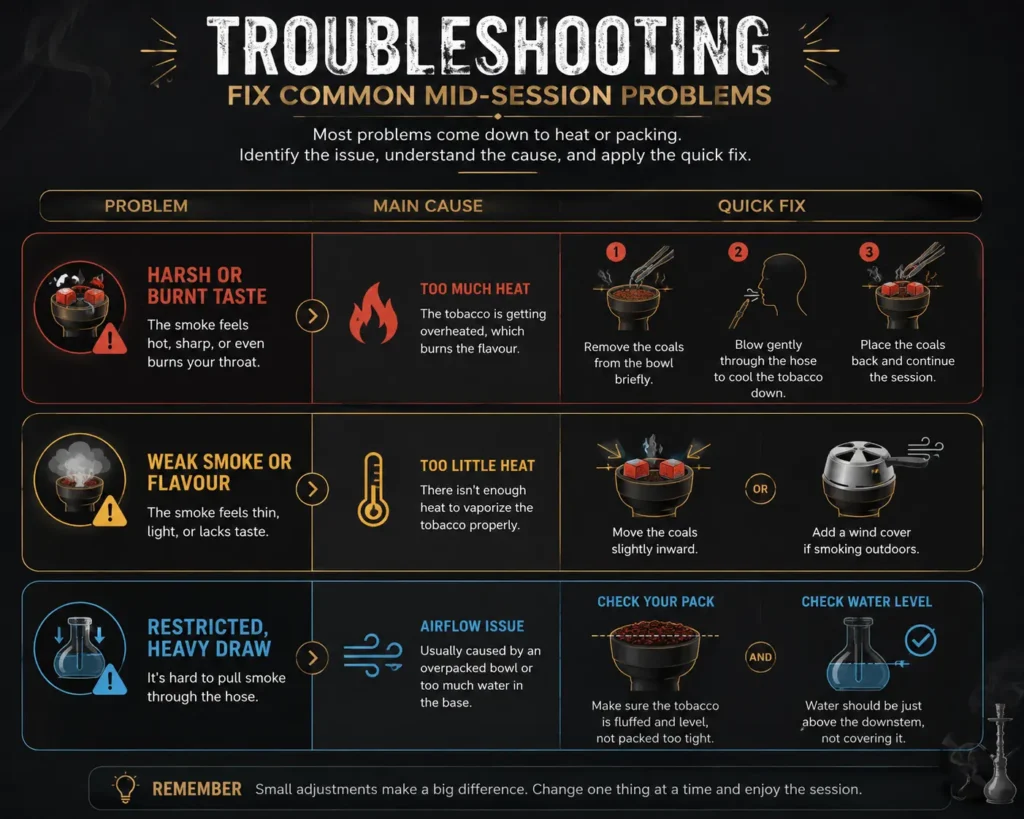
Shisha troubleshooting guide for harsh smoke, weak flavour, and restricted airflow

Most mid-session problems trace back to one of three causes, and each has a direct fix.

  • Harsh or burnt taste – Too much heat. Remove the coals from the bowl briefly, blow gently through the hose to cool the tobacco down, then place the coals back and continue the session.
  • Weak smoke or flavour – Too little heat. Move the coals slightly inward, or add a wind cover if smoking outdoors.
  • Restricted, heavy draw – Usually an overpacked bowl or too much water in the base. Check both before adding more heat.

Common Beginner Mistakes

Most first sessions go wrong for one of a handful of repeat reasons, all covered above:

  • Skipping the leak test and only discovering a loose grommet after the bowl is packed.
  • Overpacking the bowl instead of using the fluff pack method, which blocks airflow.
  • Guessing the water level instead of using the 1 to 1.5-inch range as a starting point.
  • Using quick-light coals indoors instead of natural coconut coals.
  • Placing coals before they’re fully lit, which increases carbon monoxide and leaves a foul taste.
  • Pulling hard and fast instead of drawing slowly and steadily.
  • Skipping the pre-setup rinse, letting ghosting flavour carry into a fresh bowl.

Post-Session Care: Cleaning and Preventing Ghosting

Once the coals have fully cooled, dispose of the ash safely and rinse the base, stem, and bowl with warm water. Residue left in the pipe leads to ghosting, where old flavour lingers and bleeds into the next session regardless of what fresh tobacco goes into the bowl.

A quick rinse after every session is far easier than the deep clean needed once ghosting has properly set in.

Shisha Safety Essentials

  • Always handle hot coals with metal tongs, never bare hands.
  • Use charcoal only in a well-ventilated area, and follow the charcoal manufacturer’s safety instructions.
  • Let coals fully ignite before placing them on the bowl — incomplete combustion of any charcoal increases carbon monoxide production.
  • Drink water throughout the session, since a long smoke can be dehydrating.

Preparing Shisha Correctly, Every Time
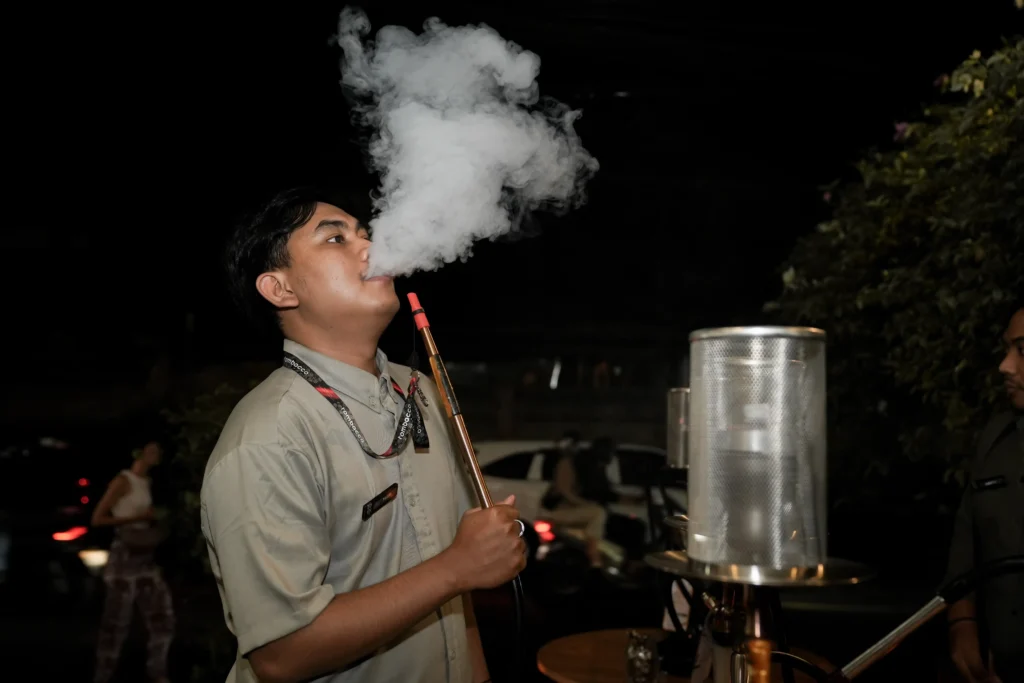
Enjoying a shisha session after preparing the hookah and managing the heat

Once the water level, the leak test, the fluff pack, and active heat management become routine, the trial-and-error that trips up most beginners mostly disappears. How to prepare shisha well is less about any single step and more about running all of them in the right order, every time.

Tombacco’s full range — Whiteline, Blackline, and Herbal — is produced in Indonesia under international supervision, giving every session a consistent starting point to build good technique on. Browse Tombacco’s full range of shisha tobacco to find the right line for the next session.

Frequently Asked Questions

How much water should go in a shisha base? Around 1 to 1.5 inches above the downstem is a good starting point, though the ideal depth varies with the hookah’s design. Adjust from there based on how the draw feels.

How much shisha tobacco should I put in a bowl? Around 20 grams as a general starting point for a standard-size bowl, adjusted up or down depending on the bowl’s size. Fill loosely up to the rim gap without compacting the tobacco — visible gaps mean more is needed, while tobacco pressing against the sides means there’s too much.

How long should I heat shisha before smoking? Light the coals until they glow red and are covered in grey ash, which usually takes around 8 minutes, then let them sit on the bowl for a further 5 to 8 minutes so the tobacco can preheat before the first draw.

Why does my shisha taste harsh? Most often an overpacked bowl, tobacco touching the foil or HMD, or too much heat. If it happens mid-session, remove the coals briefly and blow through the hose to cool the tobacco down before placing the coals back — usually enough to fix it without a full repack.

Should I use natural coals or quick-light coals? Natural coconut coals are generally preferred. They tend to burn more evenly and last longer, with less risk of a chemical taste carrying into the smoke.

Which Tombacco line should a beginner start with? Whiteline, Tombacco’s washed Virginia line, for a milder, more approachable first session. Tombacco’s nicotine management guide breaks down how Whiteline, Blackline, and Herbal compare.

How do I check my setup is airtight before adding coals? Cover the top of the stem with a hand and draw through the hose. If air pulls through freely, check the grommets before packing the bowl.

Kategori
Hookah Guide

How to Manage Nicotine Level in Shisha | Tombacco Shisha Guide

The fastest way to change how a shisha session feels isn’t the bowl, the charcoal, or the pack — it’s the tobacco line already in the bowl. Learning how to manage nicotine level in shisha starts with that choice, because every adjustment made afterward is really just fine-tuning around it.

Tombacco built its catalogue around three lines specifically so that starting point can be chosen on purpose: Whiteline for a lighter session, Blackline for a stronger one, and Herbal for none at all. Bowl shape, pack density, and heat only shift how quickly whichever line is in the bowl releases its nicotine.

A single session can run 45 minutes or longer, so the total nicotine absorbed can add up fast, even when each puff feels mild. Left unmanaged, that build-up often shows up as nausea, dizziness, or a pounding headache — the tell-tale signs of a nicotine rush.

Tombacco produces all three lines in Indonesia under the supervision of an international team spanning Germany, Russia, Ukraine, the Netherlands, and Indonesia — the production standard this guide is built on.

Quick Answer: Start With the Right Tombacco Line

How to manage nicotine level in shisha comes down to choosing the right line first — bowl, pack, and heat only adjust it from there:

  • Tobacco line (primary): Whiteline for a lighter session, Blackline for a stronger one, Herbal for zero nicotine.
  • Bowl (fine-tuning): Phunnel bowl to mellow delivery, traditional bowl to intensify it.
  • Pack (fine-tuning): Dense pack to slow the buzz, loose pack to increase it.
  • Heat (fine-tuning): Fewer coals, or a Heat Management Device, to avoid spikes.

Choose the line first, then adjust bowl, pack, and heat to match the session.

Whiteline, Blackline and Herbal: Tombacco’s Nicotine Framework

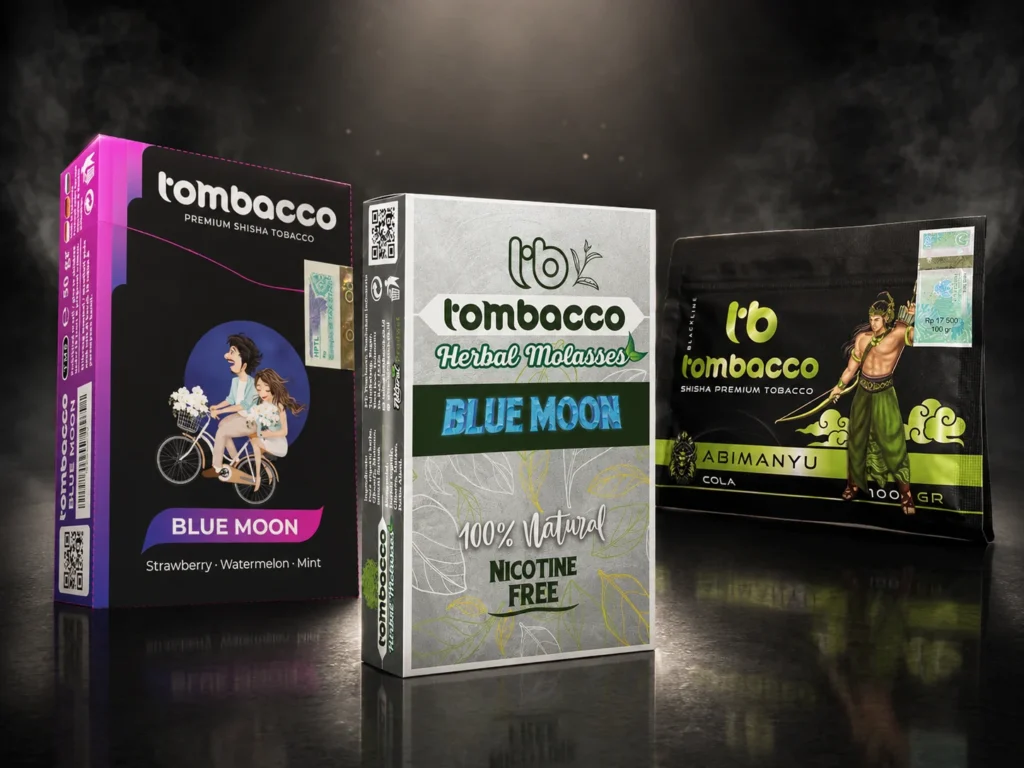
Tombacco Whiteline, Herbal, and Blackline products displayed together, showing three different nicotine options for various smoking preferences.

Every session starts with the leaf, and understanding it is the primary decision in how to manage nicotine level in shisha — everything covered later in this guide only adjusts it.

Whiteline for a Controlled, Lighter Session

Whiteline is Tombacco’s Virginia-leaf line, washed during processing to keep nicotine at a low-to-medium level. Single-flavour options like Mango, Pineapple, and Watermelon sit in the Whiteline collection, while the Whiteline mix flavours blend profiles such as Monkey Forest and Oolong Tea for more complexity without raising the nicotine floor.

It’s the natural starting point for beginners, or anyone prioritising flavour over intensity.

Blackline for Smokers Who Want More Intensity

Blackline is built on unwashed Burley leaf, which retains a naturally high nicotine content and delivers a noticeably heavier throat hit. Tombacco positions it plainly as the line for strong tobacco lovers, with blends like Bima and Abimanyu built for smokers who already know their tolerance — full details sit on the Blackline product page.

Prolonged sessions on high-dose Blackline can lead to desensitisation, where the same bowl gradually feels weaker over time — worth watching for anyone smoking it regularly.

Herbal When Nicotine Isn’t the Point

Tombacco Herbal replaces tobacco leaf with a tea-leaf base infused with flavoured molasses, in profiles like Apple, Strawberry, and Watermelon. It produces genuine flavour clouds through the same packing and heat principles covered later in this guide, just without any nicotine reaching the lungs.

The full range sits on the Tombacco Herbal product page.

Blending and Adjusting Within the Line System

This covers everything that happens after a line is chosen but before hardware and heat get involved — moving between lines, and understanding why the same blend doesn’t always feel the same.

Moving Between Whiteline and Blackline

Jumping straight into Blackline is the most common cause of a rough session. A safer approach mixes roughly 10% Blackline with 90% Whiteline, then increases the Blackline ratio gradually across future sessions as tolerance builds.

For exact ratios and flavour pairings, Tombacco’s mixology guide walks through combinations that balance flavour against strength.

Why the Same Blend Can Feel Different Each Time

Prolonged exposure to high nicotine doses desensitises the body’s receptors, so regular Blackline smokers often stop perceiving lower nicotine levels the way they once did — a short break, or a temporary switch to Whiteline, can help reset that sensitivity. Strength is also subjective: two people can smoke the exact same bowl of Blackline and walk away with different experiences, since hydration, tiredness, and whether someone has eaten heavily all shape how hard nicotine hits.

Building Toward a Stronger Blackline Session

Increase the Blackline ratio in small steps — from around 20% to 40% — only once each ratio feels comfortable. A traditional bowl and a fluffier pack both add further intensity, and a single extra coal raises heat output and nicotine yield further still — covered in more detail in the fine-tuning section below.

Desensitisation is still possible even with a built-up tolerance. Stacking several changes at once — heavier Blackline ratio, fluffy pack, high heat — is the fastest route to a nicotine rush, not a stronger buzz. Change one factor per session before adjusting again.

Why Every Batch Smokes the Same Way

None of the line, blend, or ratio guidance above means anything if the tobacco itself varies from batch to batch — inconsistent tobacco makes every method of control unreliable, no matter how carefully it’s applied.

This is why manufacturing process matters as much as leaf type. Tombacco is produced with high technology under the supervision of an international team from Germany, Russia, Ukraine, the Netherlands and Indonesia, using ingredients sourced entirely from Indonesia’s natural wealth — built specifically to keep nicotine and moisture content predictable across every batch, in every line.

The practical result: a 10% Blackline mix smoked this month should behave the same way as a 10% Blackline mix smoked next month. That repeatability is what makes the ratios and techniques in this guide worth following, rather than being a one-off fluke of a good batch.

Tombacco’s production now supplies markets across South Korea, India, Japan, Taiwan, Malaysia, and Australia, alongside Indonesia — each with its own import quality checks, adding a layer of verification beyond the factory floor.

Fine-Tuning Tools: Bowl, Charcoal, and Heat

Once a line and blend are chosen, bowl shape, pack density, and heat only adjust how quickly that tobacco releases its nicotine — they can’t change what’s in the bowl to begin with.

Bowl Shape Changes How Fast Nicotine Releases

Comparison between a phunnel bowl and a Classic hookah bowl, highlighting different airflow and heat distribution characteristics.

A Phunnel bowl uses a single elevated spire that stops molasses and juices from draining away, letting the tobacco cook evenly and mellowing nicotine delivery over the session. Egyptian or traditional bowls use holes at the base instead, drawing heat straight through the stack and intensifying delivery.

Pack Density Is a Second Throttle

Preparing shisha tobacco in a bowl with the right packing method to help manage nicotine level in shisha and create a smoother smoking experience.

Gently pressing tobacco down into the bowl restricts airflow, slowing the cooking process for a smoother, lighter hookah buzz — useful even with Blackline in the bowl. Sprinkling tobacco loosely up to the rim has the opposite effect: higher airflow lets heat pass over more leaf surface area, releasing significantly more nicotine with every draw.

Charcoal and Heat Set the Ceiling

Quick-light charcoal ignites fast but regulates poorly, often spiking temperatures and producing harsh, uneven hits, while coconut shell charcoal burns slower and more consistently for a steadier session. A Heat Management Device distributes that heat more evenly than foil, and starting with two coals instead of three is a simple way to dial intensity back mid-session — the goal throughout is gentle baking, not the combustion that comes from pushing heat too far.

Tombacco’s guide to choosing safe, high-quality hookah charcoal breaks down cube sizing, red flags to avoid, and how to test a new batch before committing a full session to it.

What the Research Says About Heat and Nicotine Yield

The relationship between heat and nicotine isn’t a guess. A 2020 waterpipe study published in Tobacco Control by Brinkman et al. found that, compared with charcoal, electric heating delivered roughly 1.4 times more mainstream nicotine and 2.4 times more tobacco consumed per session — while charcoal produced substantially higher carbon monoxide exposure by comparison.

Heating method and intensity change nicotine delivery in measurable, not marginal, ways, whichever Tombacco line is in the bowl.

Common Mistakes That Push Nicotine Higher Than Expected

Most unexpectedly strong sessions trace back to one of a handful of habits, not to a “stronger” batch of tobacco.

  • Packing tighter to feel something sooner. A tight pack actually restricts airflow and slows delivery — a common reason a session feels weaker than intended, not stronger.
  • Assuming ice or a fruit head lowers nicotine. Both change airflow, moisture, or temperature at the bowl — neither touches the tobacco’s nicotine content.
  • Treating all shisha tobacco as equivalent. Whiteline sits at a low-to-medium nicotine level; unwashed Blackline runs considerably higher. Packing them the same way produces very different sessions.
  • Assuming the water bowl filters out nicotine. It cools and filters smoke, but has no meaningful effect on nicotine reaching the lungs.
  • Stacking multiple changes in one session. Switching to Blackline, packing it loosely, and adding an extra coal all at once makes it impossible to know which change caused a rush — and multiplies the risk of one.

Recognising and Recovering From a Nicotine Rush

Early Signs to Watch For

A nicotine flash typically shows up as nausea, dizziness, sweating, and a racing heart — catching these early makes them easier to manage before they escalate.

What Actually Helps Mid-Session

Smoking on an empty stomach is a common trigger, since heavy nicotine intake can drop blood sugar levels — part of why a rush feels so sudden. Eating beforehand, drinking water throughout, smoking somewhere well ventilated, and pacing the draw rather than pulling continuously all help keep a session comfortable.

Which Tombacco Line Matches Your Smoking Style?

A smoker enjoying a relaxed hookah session while choosing the Tombacco line that best matches their preferred smoking experience.

Every part of how to manage nicotine level in shisha comes back to one decision — which line fits the way you actually smoke.

  • New to shisha, or smoking mainly for flavour? Start with Whiteline, packed densely in a Phunnel bowl.
  • Experienced, and want a stronger, longer-lasting hit? Move toward Blackline using the 10/90 blending approach above.
  • Want the ritual and the clouds without any nicotine at all? Herbal delivers both on the same hardware.
  • Not sure yet? Tombacco’s guide to choosing the right shisha tobacco walks through the same decision in more depth, flavour by flavour.

The Tombacco Standard: Consistency You Can Smoke Again

How to manage nicotine level in shisha isn’t really about mastering hardware — it’s about choosing the right line, understanding it, and letting bowl, pack, and heat do what they’re actually meant to do: fine-tune, not compensate.

How to Manage Nicotine Level in Shisha, in Practice

Choose Whiteline, Blackline, or Herbal first, adjust bowl and pack second, and treat heat as the final dial. Followed in that order, session after session, that sequence is how to manage nicotine level in shisha reliably rather than by trial and error.

Tombacco’s mission is to position Indonesia as a producer of shisha tobacco with genuinely international quality — built on ingredients native to Indonesia, produced under German, Russian, Ukrainian, Dutch, and Indonesian supervision, and now trusted across South Korea, India, Japan, Taiwan, Malaysia, Australia, and Indonesia itself. That consistency is what turns a good session into a repeatable one.

The full catalogue, including Whiteline, Blackline, and Herbal, is available at Tombacco’s homepage.

Frequently Asked Questions

Is Blackline tobacco suitable for beginners? No. The higher nicotine content can quickly lead to a nicotine flash, so beginners should start with Whiteline instead.

What is the best way to pack a bowl to reduce dizziness? Use a Phunnel bowl with a dense pack. Restricting airflow slows the rate of nicotine vaporisation and softens the overall hit.

Can I smoke shisha without nicotine? Yes. Tombacco Herbal replaces tobacco leaf with a flavoured tea-leaf base, delivering full flavour with zero nicotine.

Does shisha have more nicotine than a cigarette? A single session can deliver more total nicotine than a cigarette simply because of its length, even though each puff feels milder. Choosing the right line, then adjusting pack density and heat, keeps total intake in check.

How does Tombacco keep nicotine levels consistent across batches? Production runs under the supervision of an international team using Indonesian-grown ingredients, with process controls built specifically to keep nicotine and moisture content predictable from batch to batch.